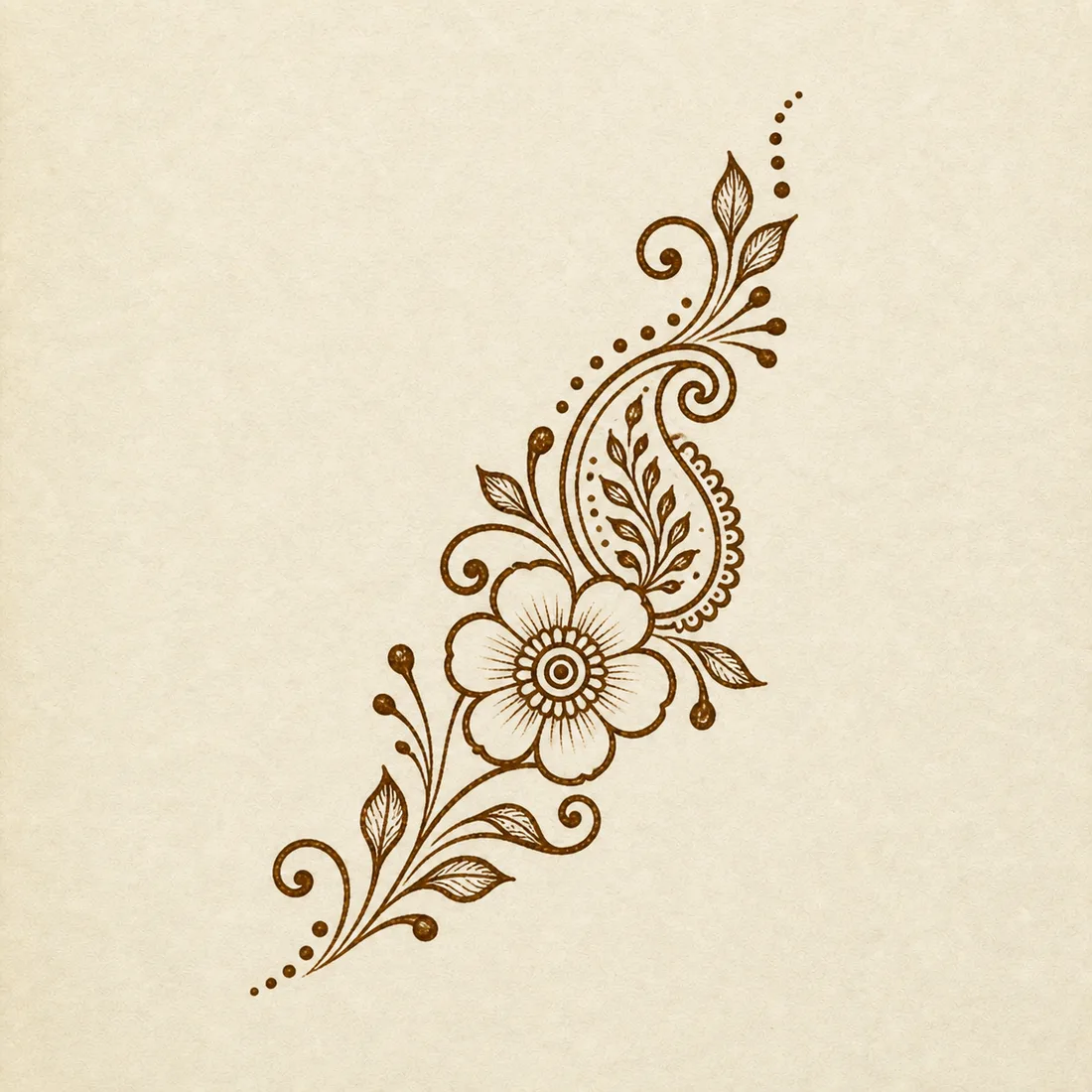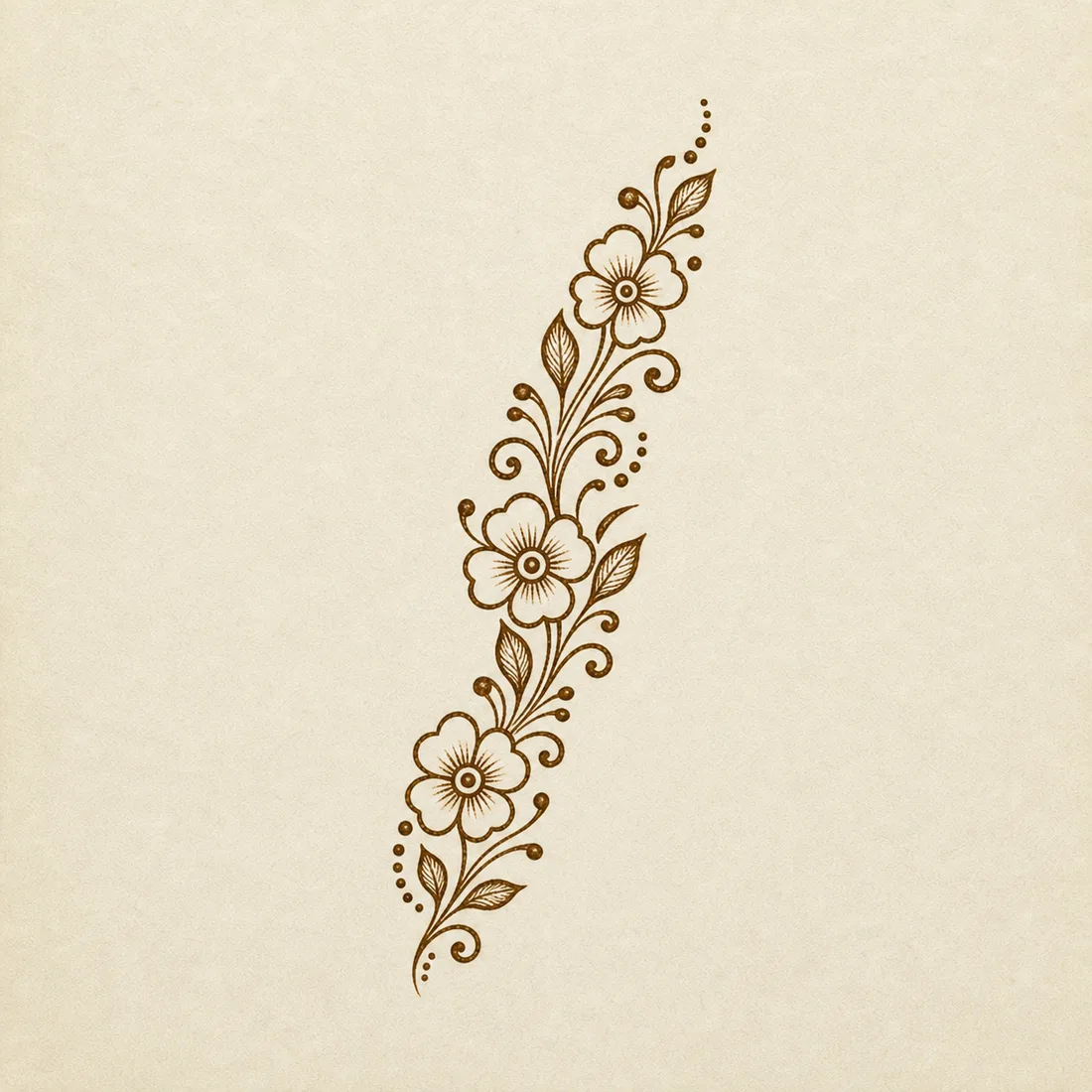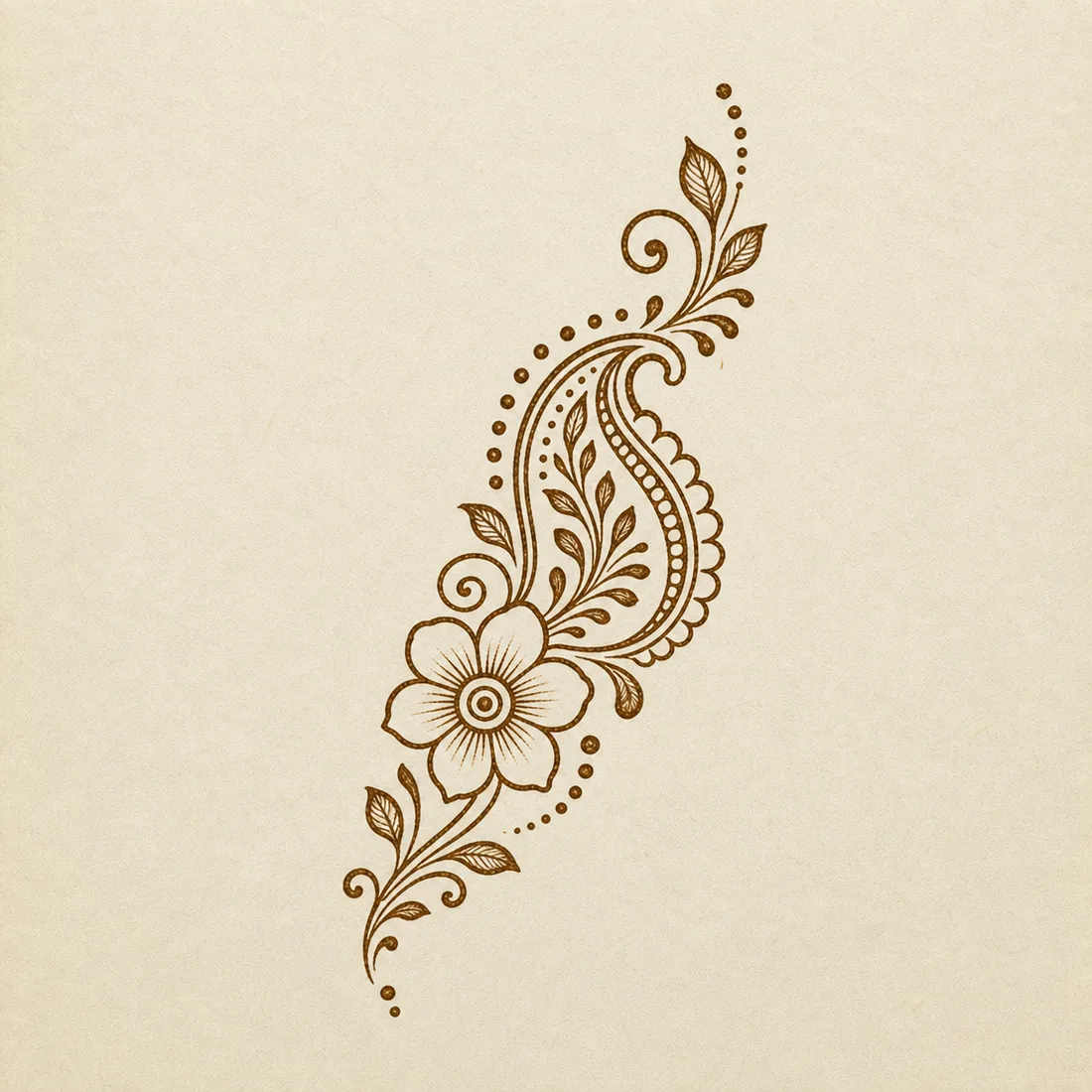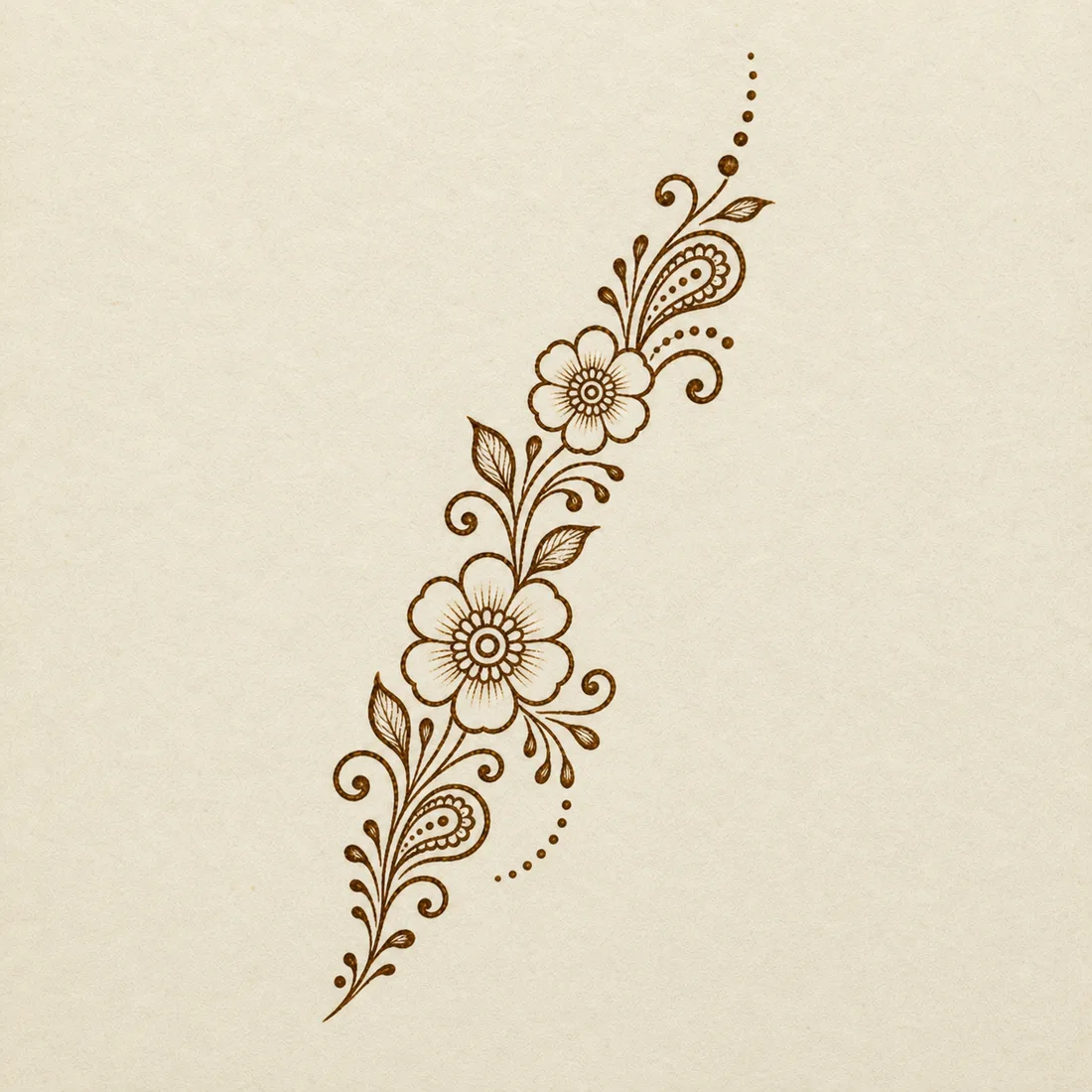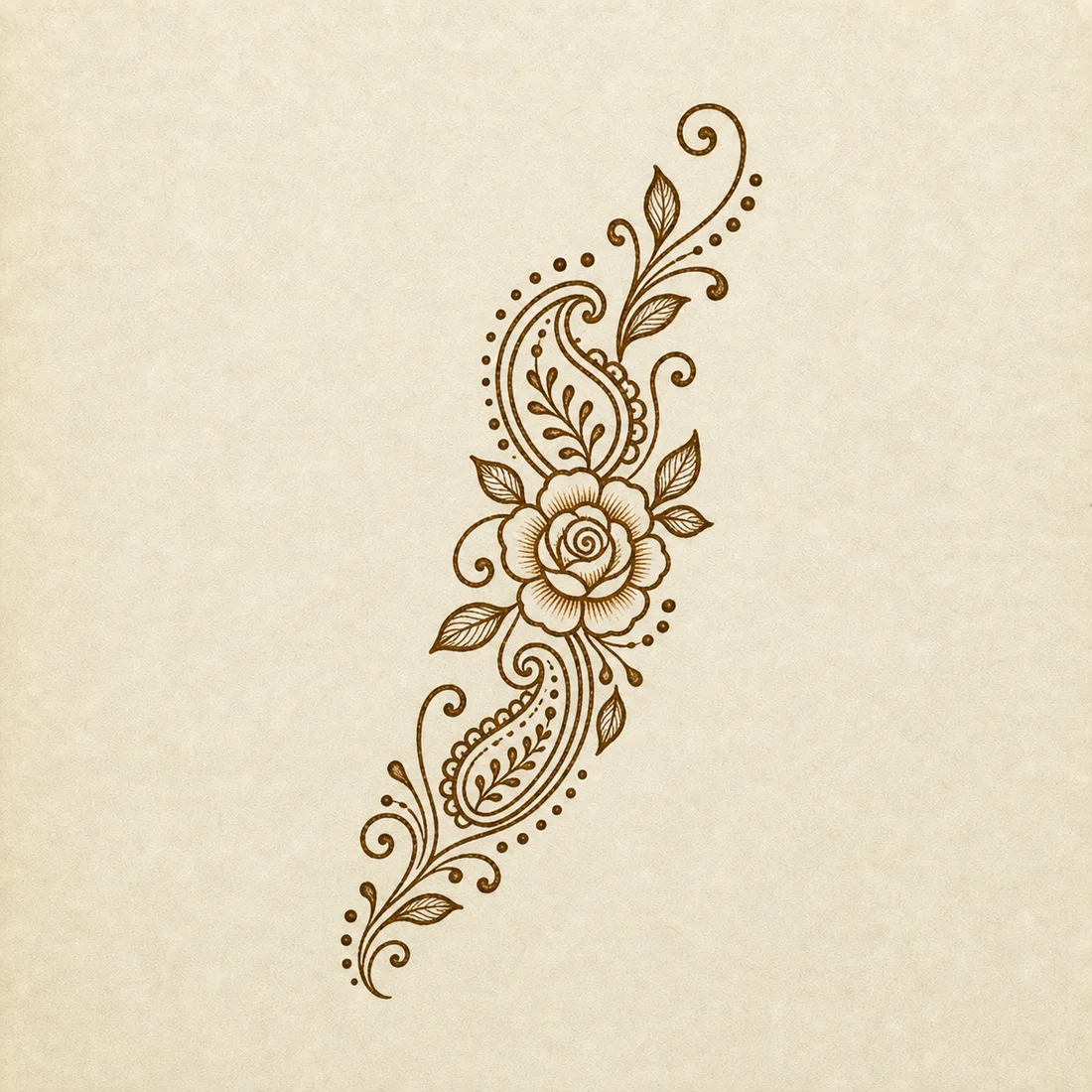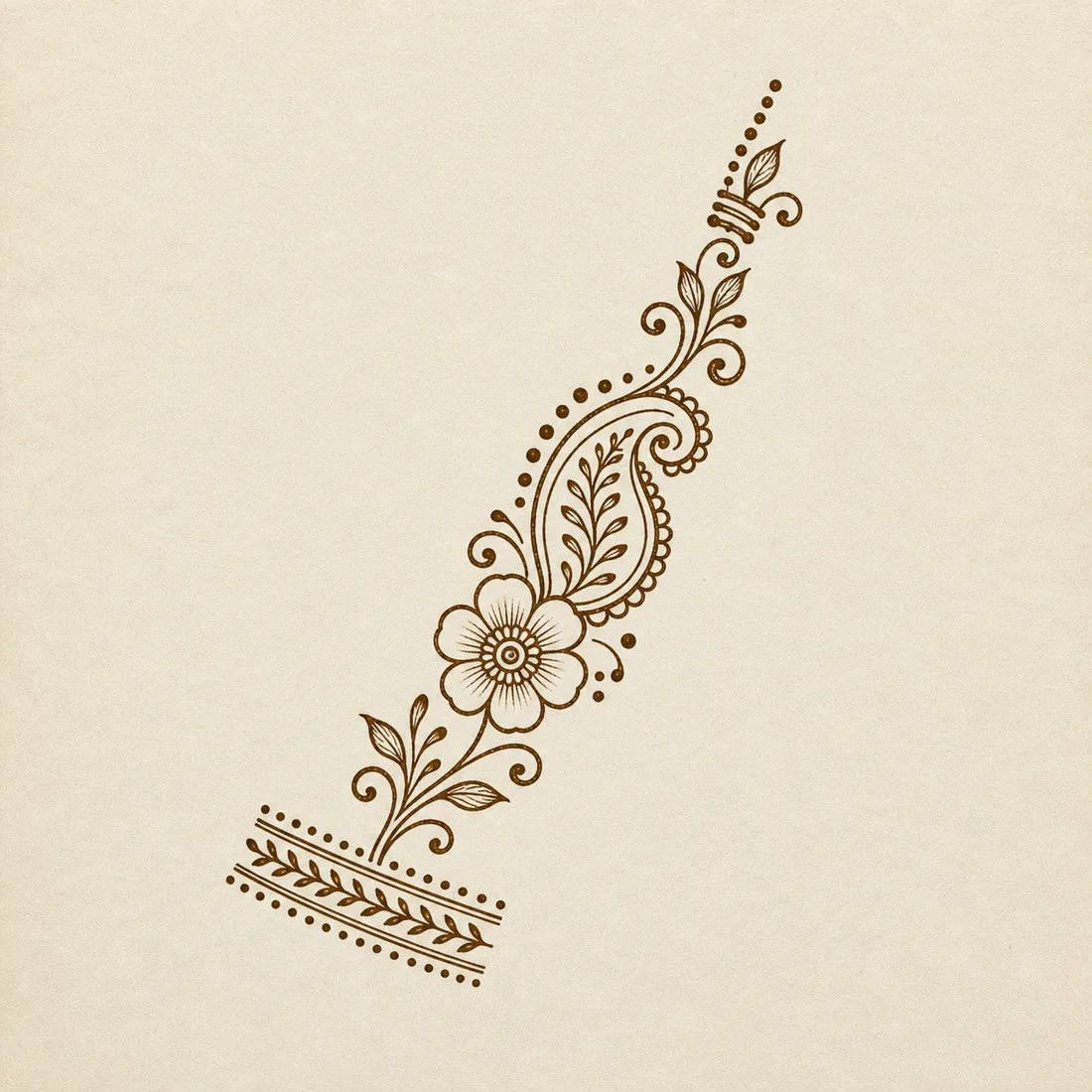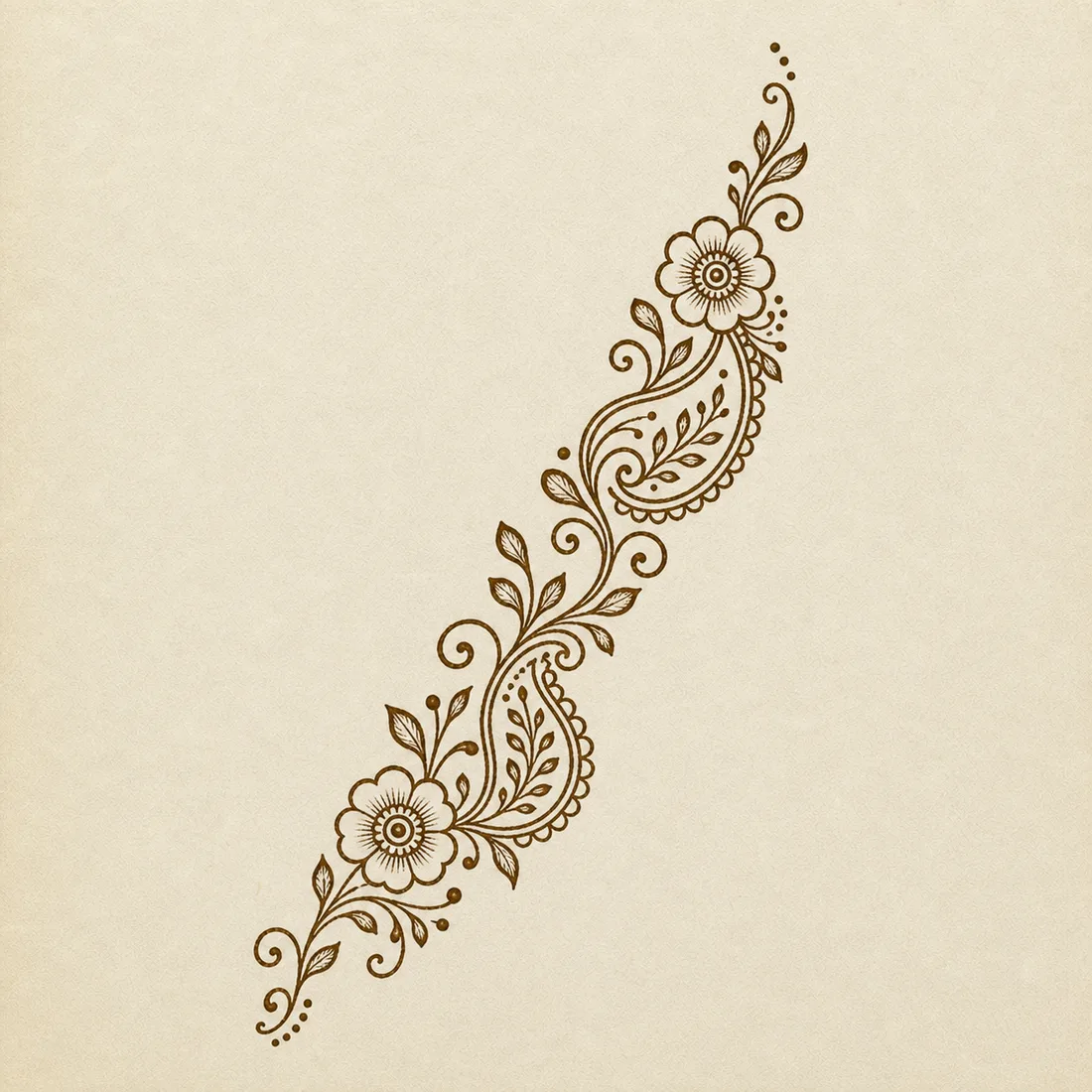
Arabic mehndi is known for flowing vines, open paisleys, floral trails, and visible negative space. These templates keep that airy Arabic feeling without making the design too dense for practice.

Use the diagonal trails for front-hand layouts, the bracelet trail for a wrist-to-finger look, and the open paisley designs when you want a festive pattern that still leaves room to breathe.

How to choose an Arabic design

  • Pick diagonal floral trails if you want the hand to look longer.
  • Use open paisleys instead of dense filling for an easier version.
  • Choose bracelet trails when you want a wrist-to-finger composition.
  • Keep dots and leaf sprays light so the design stays Arabic-inspired and airy.

Practice sheet

Use this gallery as a paper practice sequence

Start with Template 01, copy the larger shapes first, then add dots, leaves, and small fills after the main linework feels steady.

Arabic style notes

Questions about easy Arabic mehndi

What makes Arabic mehndi different?

Arabic mehndi often uses flowing vines, open paisleys, floral trails, and more negative space than dense Indian bridal styles.

Are Arabic mehndi designs good for beginners?

Open Arabic designs can be beginner-friendly because they rely on large flowing shapes instead of tiny dense fills.

Where should I place an easy Arabic design?

Diagonal trails work well on the front hand, back hand, or wrist-to-finger layouts.